My Nanny was a force before she ever had the chance to choose it for herself.
Her daddy wanted a boy so badly that when a girl showed up instead, he named her Billie Joe Earl anyway. Earl. Like the name alone could talk reality into behaving. It didn’t, obviously — she was a girl, and she grew up to be one of the most formidable women I have ever known. She was five foot nothing, and people took one look at her and thought “sweet little thing.” She spent her whole life proving them wrong. But also, somehow, kind of right. She was sweet. She was also not a thing to be underestimated, ever, by anyone.
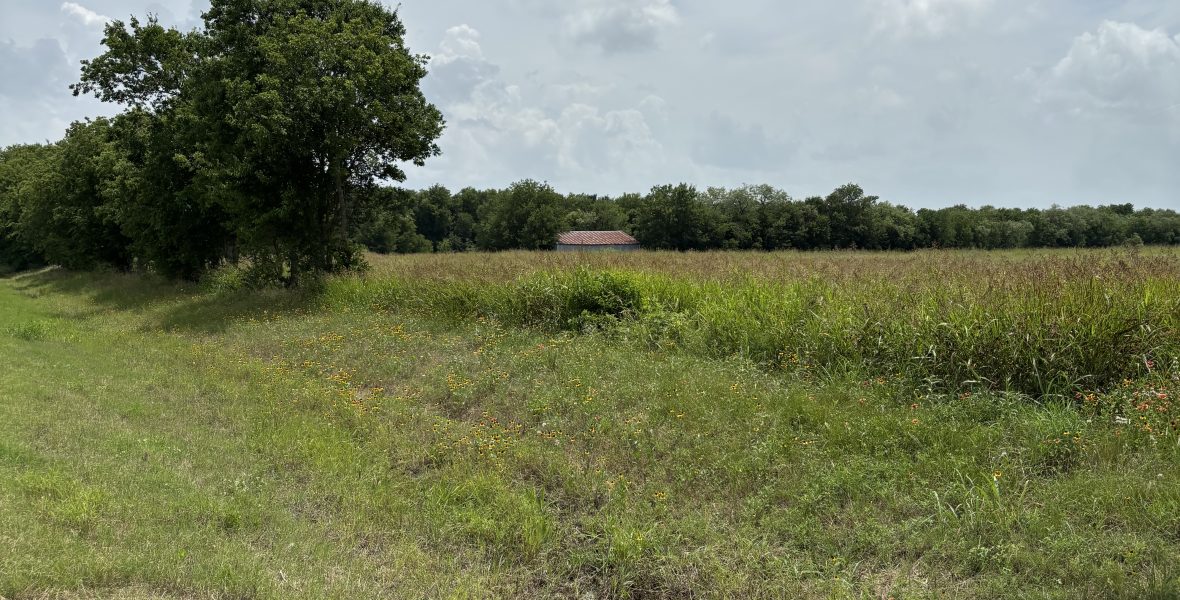
She didn’t get much of a run at having a daddy. He was killed by a drunk driver when she was young, and after that it was just her and her mother — my great Nanny — in a Texas town so small it didn’t crack a thousand people. My great Nanny never remarried. She ran a little cafe instead, and dipped snuff, and ate raw yellow onions with sugar like it was a perfectly normal snack. It’s not, for normal people, I guess — I’ve tried it and I love it. The apple doesn’t fall far. She raised my Nanny alone in the back-woods of Texas in the 1930s and 40s, and she ran that cafe like she owned the whole town, because in the ways that mattered, she did.
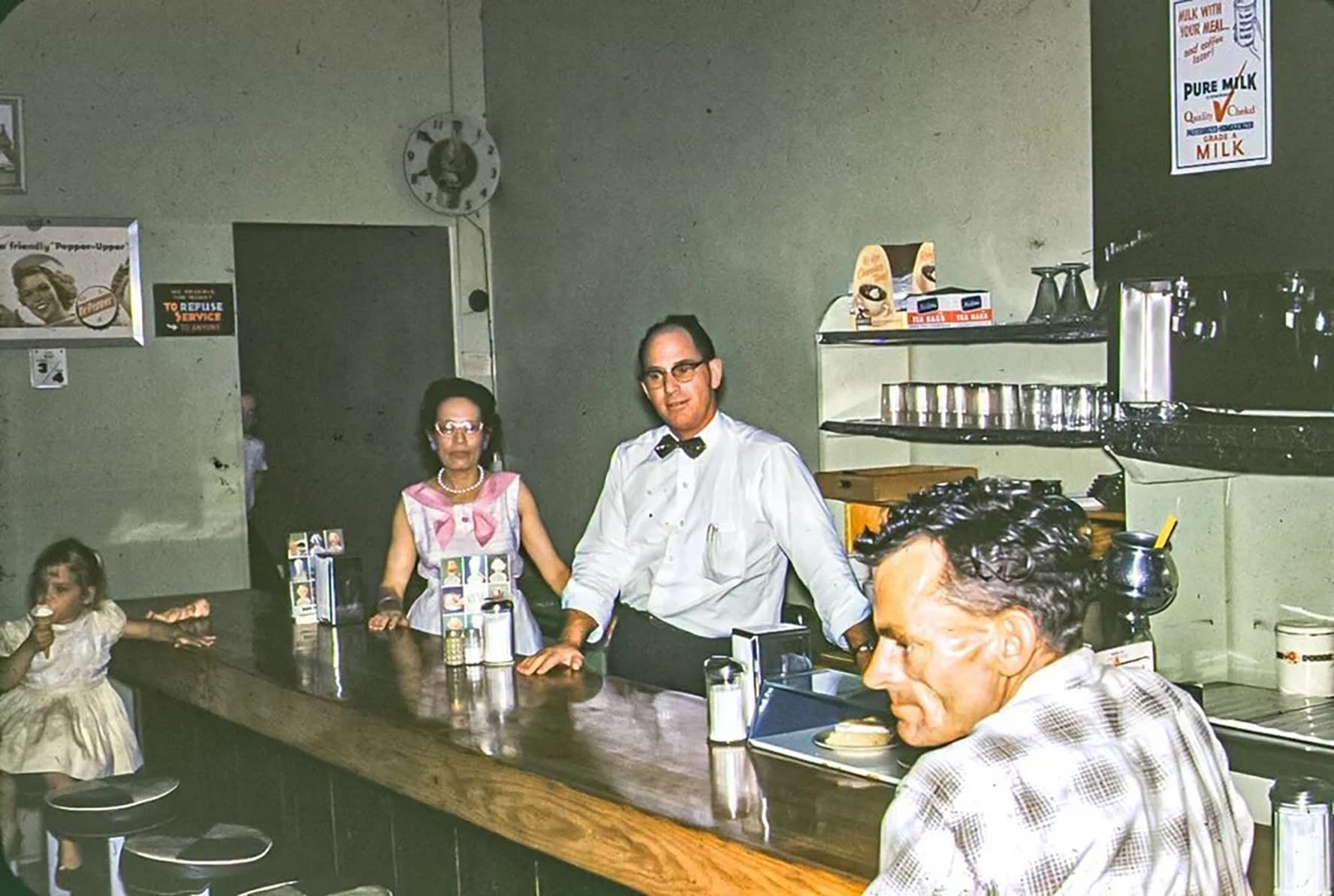
Here’s a favorite story from those years my great Nanny spent raising my Nanny. Her cafe was always busy, but sometimes white customers complained about eating in a dining room with “colored folks” and demanded they eat somewhere else. Great Nanny didn’t come to play. She always told them — and I’m going to recite this as it was told to me, presumably in her own words, because softening them would be a disservice to her:
A widowed single mother, in a town of less than a thousand people, in the deep south, decades before anyone was legally required to agree with her. Great Nanny took no prisoners. She’s my hero. She was my Nanny’s hero first.
When my great Nanny got sick, I was only five. I have so few memories of her — a handful of fragments, nothing whole. What I do remember, what got told to me and confirmed by everyone who was actually there, is that my Nanny took care of her. Stayed home with her. Bathed her. Fed her. She was with her when she slipped into eternity to be with Jesus. It wasn’t the last time my Nanny would give someone that kind of ending. It wouldn’t even be the last time she’d give it to someone in this story.
My Nanny married my Papa in a shotgun wedding at seventeen. My Papa was one of those quietly extraordinary men — he only spoke when it mattered, which somehow made everything he did say land harder. He graduated high school, never went to college, and still ended up a self-taught aeronautical engineer at Boeing, working on the team that developed the B-52 bomber.
So many things this country has accomplished are owed to my Papa and the men who worked beside him on that project.
Nanny gave him five girls in eight years. Five. In eight years. She had those babies so fast that when my mama was still a newborn, her uterus fell out. Fell out. It still boggles my mind what she endured, physically, to build the family she built. Yet she was, by every account and every memory I have, the best mother who ever lived. She cooked three meals a day from scratch, made their clothes herself, took them everywhere, built a whole world for them out of nothing but effort and love.
$25 a week. Seven people.
When my mother — the baby of the five — got to high school, my Nanny went and got a job at TCU, where she eventually became head of nutrition for the boys’ sports program. She fed football players for a living, this woman who’d spent two decades feeding five daughters at her own table. When my Papa died, the church was filled with boys my Nanny had fed. Boys who were grown men now, who came to support her the way she’d once fed them into being grown men at all.
She and my Papa built a house together in Grand Prairie, Texas — he built it with his bare hands when my mother was about three — and that house held all of them. He planted a garden there, a large one, the envy of the whole neighborhood. He nurtured her, and their girls, the same patient way he nurtured that garden — and it showed, in all of them.
We lived in New Mexico when I was little, but we were back and forth constantly. My Nanny and Papa weren’t visit-twice-a-year kind of grandparents. They were woven into my life, thread by thread, until I couldn’t tell you where the family fabric ended and they began.
When my Papa got sick, Nanny turned her caregiving toward him, the same way she had for her five daughters and, before that, for her own mother. She was relentless in her pursuit of making him as comfortable as possible — loving him and caring for him in sickness exactly as she had promised, decades before, when she was seventeen and he was hers. The last time I saw my Papa, my mama asked him something I will never forget as long as I live. I believe, to this day, that the deepest thing he and my Nanny ever shared was their faith — an unrelenting belief that if they stayed focused on Jesus, they could survive anything, including this.
My mama asked him, “Daddy, are you trusting on Jesus as your Savior?” She knew he’d be crossing into eternity soon, and she needed to be sure. He looked at her, as strong as I think I ever saw him, despite being days from the end, and he said:
The most important year for me with Nanny was my senior year of high school. By then, my Papa had passed, and my Nanny had sold the Grand Prairie house — the one he’d built with his own hands, the one that held every memory of raising five girls — and moved back to the quiet life she and my Papa had both come from, on our fifth-generation family farm. At first, none of us understood why she’d leave that house behind. We stood outside it, took photos, and cried the day she left it. Now I know she was right to go.
That year, I lived with her. I cooked with her. I tended the land with her. Her biscuits and gravy — the same ones she’d made all those years before for her own daughters and TCU football players — became a regular tradition for me and my friends. They’d pull up before school with empty bellies and sometimes empty hearts. She filled them all. Every single time. Before long, breakfast at Nanny’s was the talk of the school; everyone wanted to be invited. It’s just who she was. Selfless. That year, I got a version of her I don’t think my own mother even got to have — my Nanny, unhurried, teaching me things without ever once making it feel like a lesson.
When she got sick in 2019, the whole family turned to me, because in my early adulthood I’d been a CNA. I’d worked with elderly people through every stage of illness there is. I knew what end-of-life care looked like before I ever imagined it would be hers.
She came to live with my mom, and I showed up every day. I bathed her. Fed her. Did her hair. Made sure she took her meds. I did for her what she had done for her girls, for her mother, for my Papa, and even for me.
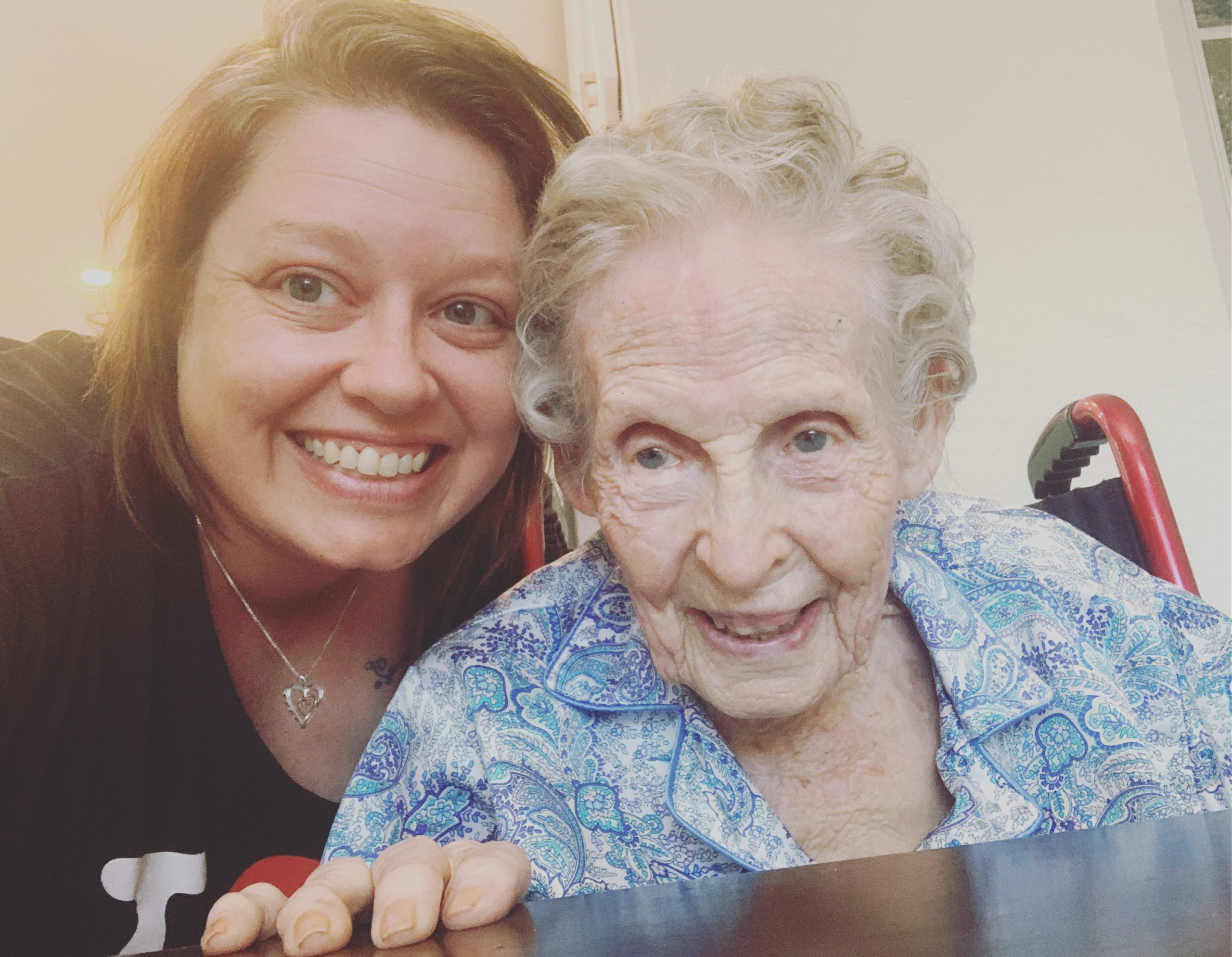
That’s the year she told me her middle name. I had grown up my whole life not knowing that this crazy strong, resilient, kind, God-fearing woman had spent her entire life carrying a middle name she’d wanted to escape from the day she got it. I always thought Jo was her middle name — I never even considered that her first name was actually Billie Jo, and that somewhere behind it, she was hiding an actual middle name. One day we were talking about my mama’s middle name, which is also my youngest daughter’s middle name, and Nanny was going through all her girls’ names, and I said, “Nanny, what’s your middle name?” You should have seen her face. I could tell she was wishing, right in that moment, that she could get up and run. I poked and prodded while she resisted, and finally she gave it up.
“Earl.”
I cannot describe the sound that came out of me. I couldn’t breathe. Neither could she.
She got Covid from a CNA who came once, maybe twice a week, to give my mom and me some respite — someone we brought in specifically so we could rest, and instead it cost us the thing we were trying to protect. I was out of town when the nurse called. I will never forget her voice. “You better get home,” she said. That nurse respected me as a CNA. She knew I would understand what she wasn’t saying out loud, and she trusted me with it before she even told my mother. She gave me one more moment with my Nanny. I am forever grateful to her for that, a stranger who understood exactly what she was giving me.
I made it home. I rushed to my mom’s to see her. She wasn’t very coherent when I arrived. I gently told her I was there. I crawled into bed with her.
She squeezed my hand. That was the last time she spoke. We skipped Christmas that year.
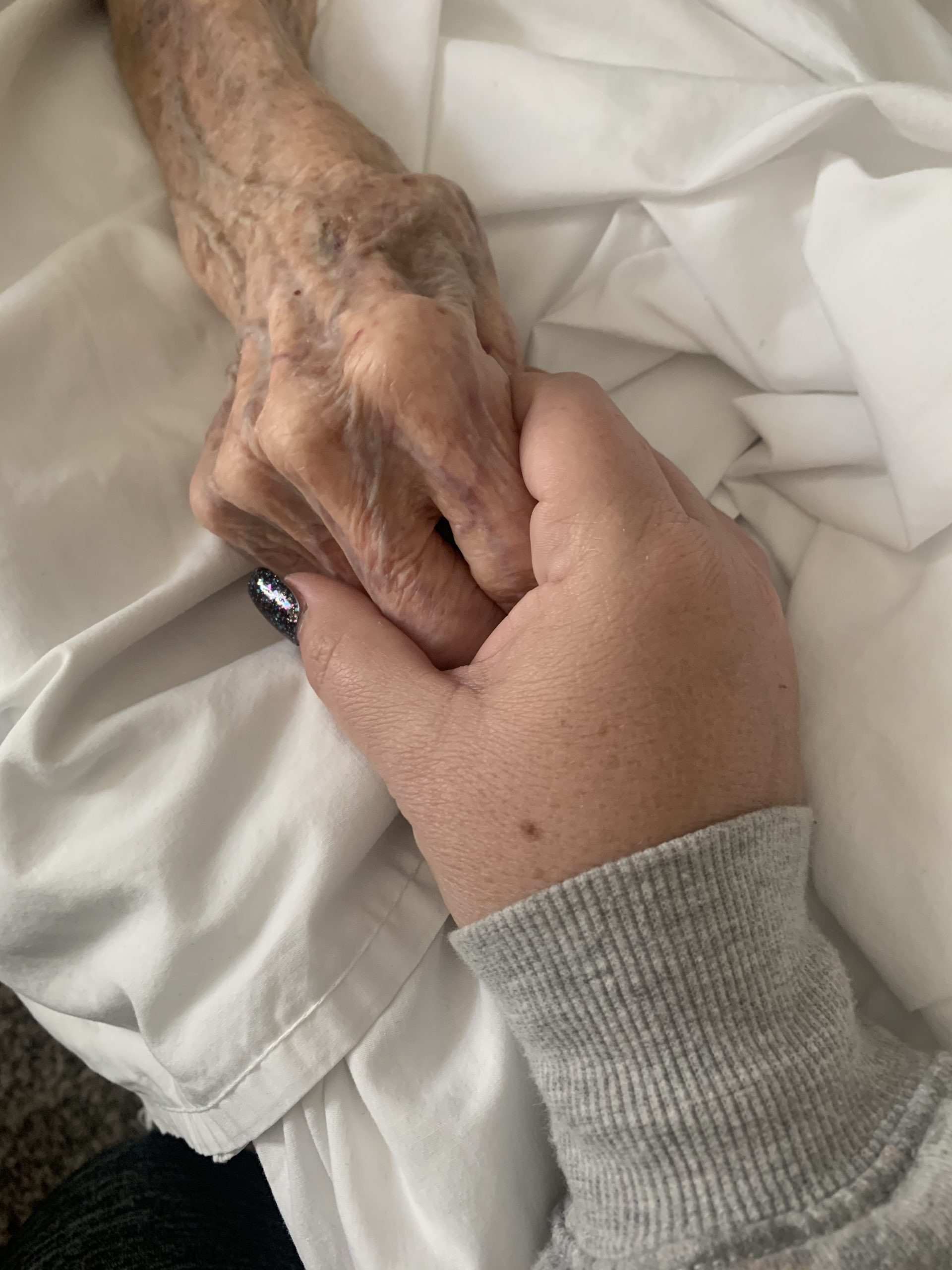
My mom fell asleep sometime before midnight — the kind of exhausted you can only understand if you’ve lived inside it. When she woke, Nanny was gone. Her death certificate says December 26th, 2020. But I’m certain she passed shortly after my mama fell asleep, on Christmas Day itself. I hold onto that. Christmas was always hers.
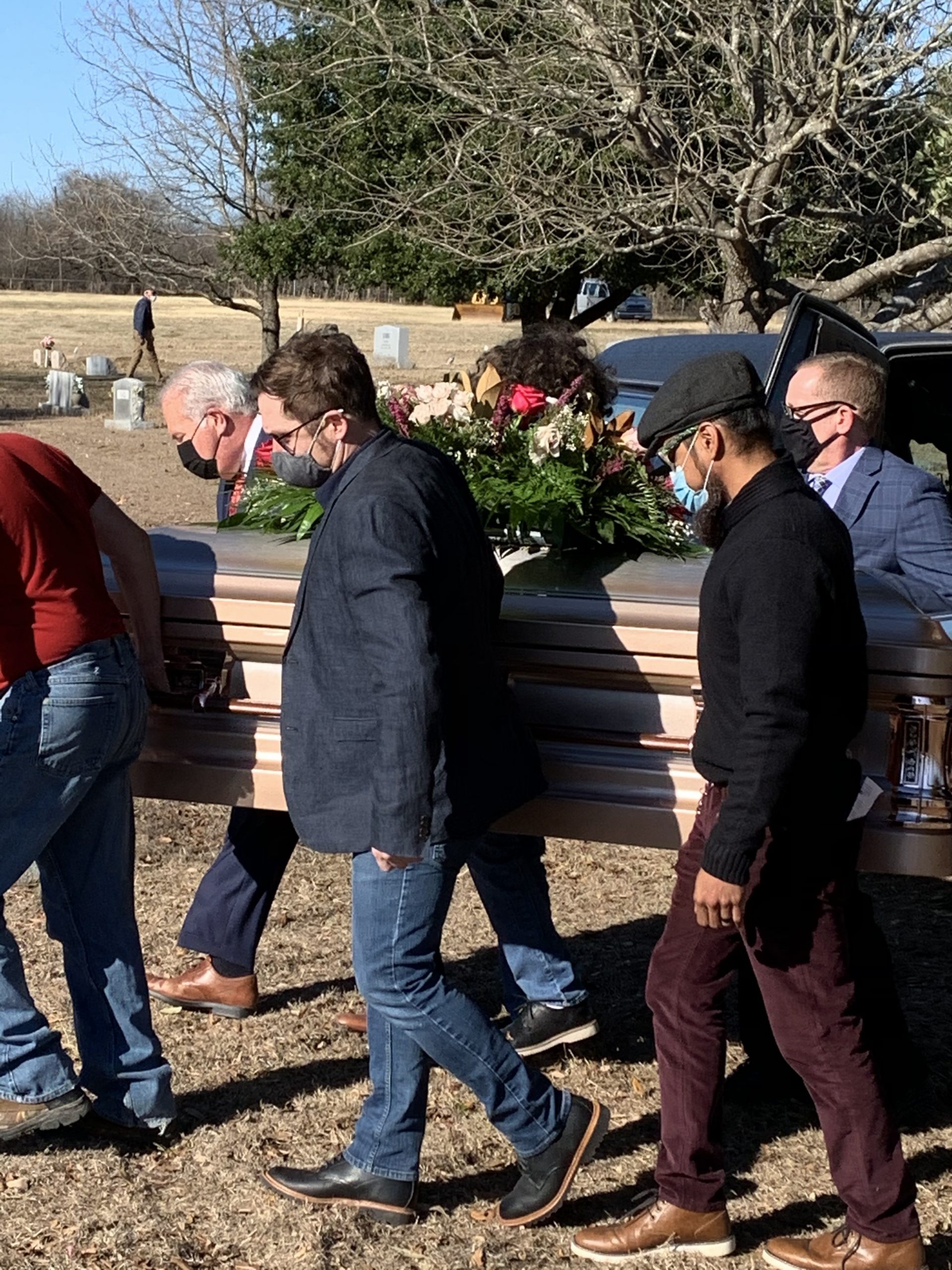
My dad officiated her funeral. I stood up and spoke — shared a poem, read a scripture. I was the only grandchild who did. Covid kept most of my family in their cars, watching like spectators instead of family, and it broke something in me to watch it happen.
There were two things she was never confused about in that last year. The first was that she knew she’d go to eternity with Jesus and her beloved Jack soon. The second was that she wanted a huge funeral. She’d planned it nearly thirty years earlier, right after my Papa passed — every last detail, decided decades in advance. My father, mother, and I honored her wishes as deeply as we knew how. My fourth husband carried her casket, alongside my son, a few others, and the man who dug the grave. I will never forget the kindness of that man. While others wouldn’t get out of their cars, afraid, he carried my grandmother to her resting place beside my Papa without hesitation, surrounded by her daughter and two of her grandchildren.
Regardless of what others did, or the fear that held them back, I will forever be proud of the ones who showed my Nanny the honor she was due that day.
For me, all the memories, all the years, all the time I spent with her couldn’t be marked by a beautiful service and a headstone alone. It deserved a lasting legacy. So it’s on my left forearm — a hummingbird, tattooed permanently into my skin, because she collected hummingbird plates her whole life and I wanted to carry a piece of that collection with me for good. I carry her in that tattoo every single day.
But mostly, I carry her in my heart — a woman with the middle name Earl, raised by a woman who told racists to get out of her cafe, who married at seventeen and raised five girls to perfection, who fed football players, loved Jesus before all else, and buried a husband she’d built a whole legacy with. A woman who spent her last year being bathed and fed by the granddaughter she’d taught to love her all the way to the end, through a lifetime of example rather than a single lesson.
I miss her dearly. But not more than I should, because I can remind myself of what she always told me:
She taught me young that death is only the end of life on earth, and that heaven is eternal. It stuck.
When I think of that, I’m happy. Happy she’s with Jack, and Ben. Tracy and Mary. My uncles John and Allen. But most of all, Jesus. Nanny is exactly where she’s needed now. Her legacy lives on in everyone she left behind — four living daughters, eight living grandchildren, and a plethora of great-grandchildren and great-great-grandchildren. What an amazing thing she built. They built. On love. Patience. Tolerance. And faith.
Or should I say, Billie Joe Earl.


August 11, 2026
Oh I miss her! She was always so nice when she visited, and boy could she cook! Everyone was her family; blood was not required. Now every time I see a hummingbird (they visit a lot here), I’ll think of her. They just don’t make people like her anymore.